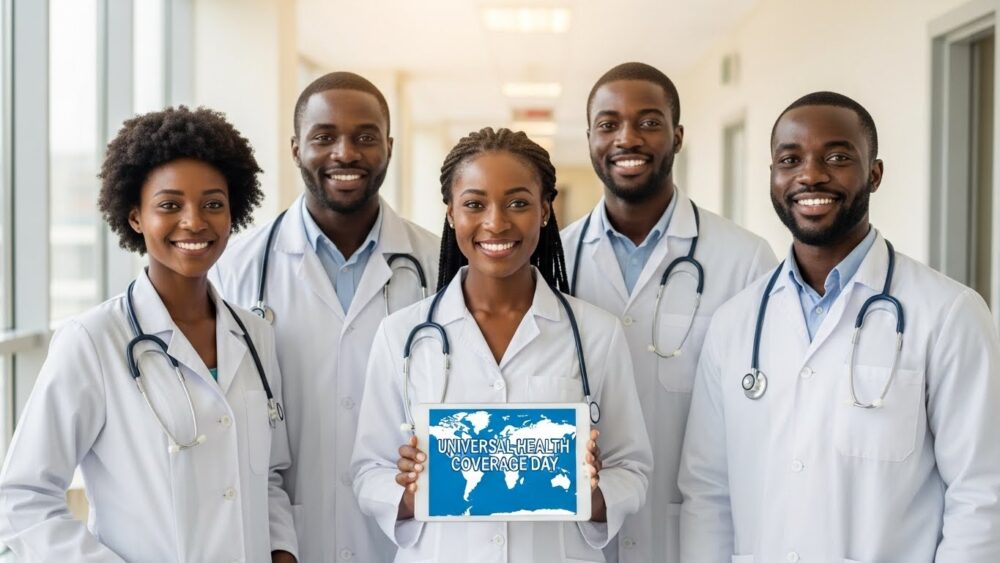

Universal Health Coverage Day highlights Nigeria’s healthcare gap. Learn how HealR empowers doctors through hybrid care to expand access and improve health for all.
Introduction: Why Universal Health Coverage Day Matters in Nigeria
Every December 12, the world marks Universal Health Coverage (UHC) Day — a reminder that healthcare is not a privilege for the few but a basic right for everyone.
In Nigeria, this message hits differently. Millions of Nigerians still travel long distances, endure long queues, or struggle for months to see a specialist. Many rural and underserved regions have only a handful of healthcare workers serving thousands of people. For internally displaced persons (IDPs), the elderly, pregnant women, and people in remote communities, healthcare access is even more fragile.
This year’s UHC theme calls for strengthening health systems, closing equity gaps, and ensuring no one is left behind. And truthfully, no healthcare system can achieve universal coverage by relying solely on brick-and-mortar hospitals.
This is where hybrid care comes in — a model combining physical healthcare with secure, responsible digital consultations.
And it’s exactly the future HealR is helping to build.
The Reality: Why Nigeria Still Struggles With Universal Health Coverage
Nigeria has some of the most dedicated medical professionals in the world — doctors, nurses, and health workers who show up every day under challenging conditions.
But the structural challenges remain deep:
- Uneven distribution of healthcare facilities
Urban centers like Lagos and Abuja have clusters of hospitals, clinics, and specialists. Meanwhile, rural communities often have only primary health centers with limited staff.
- Long distances and transportation barriers
A patient in a remote village might need to travel 30–50 km just to access a doctor — sometimes more.
- Overcrowded hospitals
Tertiary hospitals especially remain overstretched, with long waiting times for even minor conditions.
- Shortage of specialists in rural areas
Nigeria struggles with inadequate numbers of specialists in rural area, specialists in neurology, endocrinology, psychiatry, pediatrics, and more — leaving millions without proper care.
- Rising cost of healthcare access
For many families, transportation, time off work, and consultation fees create financial strain.
- IDP camps and crisis zones are underserved
Internally displaced persons often have inconsistent access to medical personnel or health education. These barriers make it clear: to reach UHC, Nigeria must rethink how care is delivered — leveraging both hospitals and digital innovation.
Hybrid Healthcare: A Practical Path Toward Universal Coverage
Hybrid care does not replace hospitals, it strengthens them by helping doctors reach people who cannot always come into a physical facility.
What Is Hybrid Care?
It is a simple model:
Physical hospital care + Secure virtual consultations = Expanded access
A patient can see their doctor virtually for follow-ups, health education, or initial assessment — and visit the hospital physically when needed.
This model:
- Reduces hospital congestion
- Saves patients time and money
- Helps doctors manage caseloads efficiently
- Expands care to underserved populations
Countries around the world — including Kenya, India, and Rwanda — are already using hybrid systems to close health gaps. Nigeria is ready for this shift too.
How HealR Supports Universal Health Coverage in Nigeria
HealR is not just a telemedicine app — it is a platform designed to help doctors extend their reach without leaving their core hospital practice.
Our mission is simple:
To make quality healthcare accessible to every Nigerian, regardless of location, income, or circumstance.
Here’s how HealR contributes to UHC:
- Empowering doctors to reach more patients safely
Doctors can offer consultations to patients outside their geographical location — enabling more people to get timely medical advice, especially for non-emergencies and chronic conditions.
- Supporting rural and underserved communities
Patients in villages, riverine areas, and remote regions can speak to qualified doctors without long, costly travel.
- Strengthening continuity of care
Follow-ups — which are often skipped due to distance — can be done virtually, reducing complications.
- Enhancing specialist access
A family in a rural area can finally speak to a pediatrician or psychiatrist without leaving their community. Specialist scarcity becomes more manageable when distance is no longer the limitation.
- Reducing pressure on hospitals
Minor ailments, medication reviews, preventive health discussions, and mental health consultations can be handled virtually — freeing hospitals to focus on emergencies and critical cases.
- Helping IDPs get timely medical advice
Telemedicine can supplement overstretched camp clinics by allowing displaced families to consult qualified doctors remotely.
A Call to Doctors: Your Expertise Can Travel Further Than Ever
Universal Health Coverage Day is more than a global observance — it is a reminder that doctors are at the heart of every functioning health system.
HealR gives doctors the tools to expand their impact responsibly:
- You keep your hospital job
- You maintain your physical practice
- And you add a flexible digital channel to support more Nigerians
Doctors on HealR are not “just consulting online.
They are closing gaps in Nigeria’s health system — making care accessible for people who would otherwise go without.
If UHC is to become reality, Nigeria needs doctors at the center of innovation, not on the sidelines.
Building Partnerships for Broader Impact
While HealR is not currently partnered with organizations, we are actively seeking collaborations that can help scale access to care nationally.
Potential partners include:
- NGOs and humanitarian groups
To support IDPs, vulnerable communities, and crisis zones with remote medical guidance and health education.
- Government health agencies
For integrating hybrid care into primary health systems and improving reach in underserved states.
- Healthcare institutions and teaching hospitals
To make specialist care more accessible and reduce patient overload.
- Corporate organizations (CSR initiatives)
To sponsor digital health access for communities in need.
- International development organizations
Working on SDG 3: Good Health and Well-being.
HealR is committed to working with partners who share a vision for equitable, accessible healthcare in Nigeria.
Universal Health Coverage: A Future We Can Build Together
UHC will not be achieved overnight.
But every doctor who chooses to expand their reach…
Every patient who gets help earlier…
And every partnership that prioritizes access over profit…
brings Nigeria one step closer.
HealR exists to support this movement — responsibly, ethically, and in full support of Nigeria’s hospital system.
Call to Action: Doctors, Join HealR in Expanding Healthcare Access
This Universal Health Coverage Day, we invite Nigerian doctors to lead the transformation.
Your expertise saves lives — and with hybrid care, it can reach even farther.
Sign up as a doctor on HealR today and help bring Nigeria closer to true universal health coverage.
Together, we can make healthcare accessible to all — not someday, but now.



Leave a Reply